12 V power for accessories
Tapping 12 V power in a pre-AP Model S for NAP accessories — fuse options, always-on vs switched, wire gauge guidance.
Updated June 11, 2026
Adding accessories to a pre-AP Model S — Tinkla Buddy, a USB hub, dash cam, or anything that needs 12 V — means tapping into the car's 12 V system. Where you tap determines whether the circuit is always-on (drains the 12 V battery when the car is off) or switched (only live when the car is on or in a specific state). The method also varies depending on your car's configuration.
Wire gauge
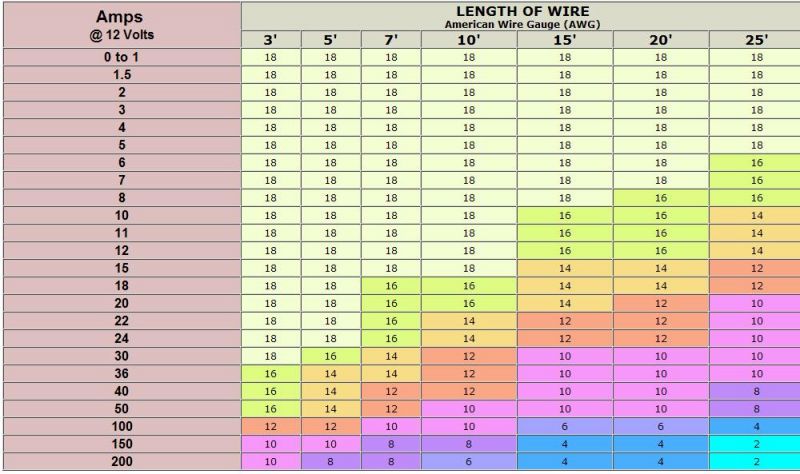
Wire gauge depends on the current draw and the length of wire you're running. For most low-power accessories in this context (under 5 A), 16–18 AWG is appropriate for runs up to a few feet. For CAN signal wiring specifically, use 22 AWG shielded twisted pair — the community recommendation is Belden 8723 or equivalent.
| Current draw | Recommended AWG (short run, < 6 ft) |
|---|---|
| Up to 5 A | 18 AWG |
| 5–10 A | 16 AWG |
| 10–20 A | 14 AWG |
| CAN signal (< 1 A) | 22 AWG shielded twisted pair |
For longer runs, go one gauge heavier. Never use cheap unshielded wire for CAN.
Option 1: Cold weather package fuse box (easiest — if you have it)
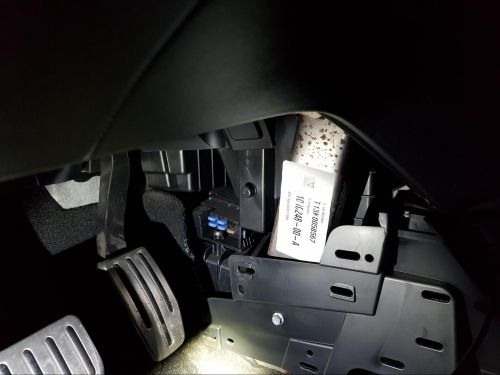
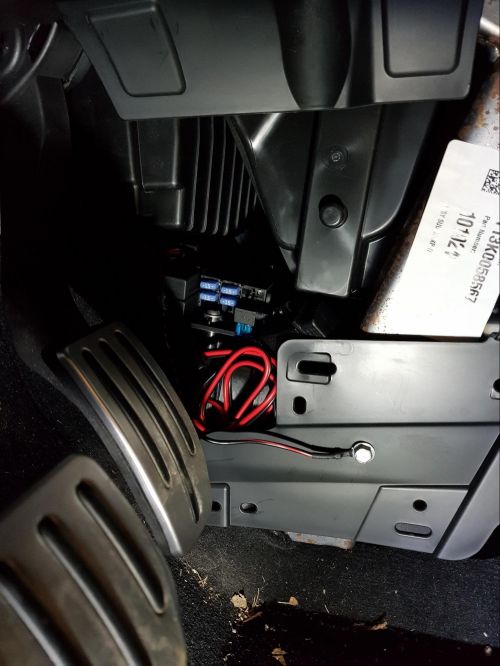
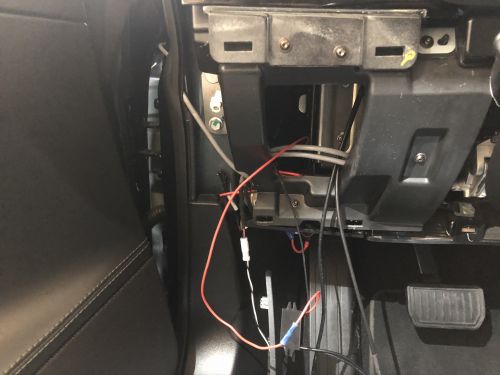
Teslas with the cold weather package have a secondary fuse box located in the driver footwell, near the accelerator pedal. If your car has this box, accessing power is straightforward and takes about 30 minutes.
Steps:
- Remove the two pieces of trim on the driver console side: the soft faux-leather strip first (pegs, starts near the driver seat), then the hard plastic panel below it (angle it upward and rotate while pulling the bottom toward you). Move the accelerator pedal out of the way as needed.
- Remove the trim panel under the steering wheel — two screws, one on each side. Disconnect the footwell light connector (small black connector, use a flat-head to release it).
- The fuse box is now visible just to the right of the accelerator pedal.
- Choose a suitable fuse slot — a 5 A brown fuse is appropriate for most low-draw accessories.
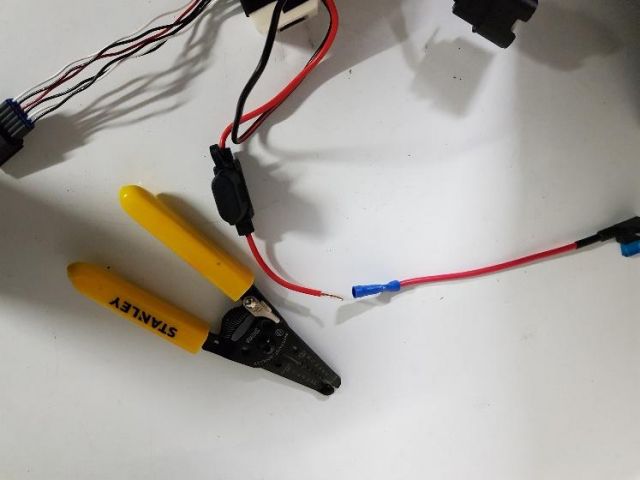
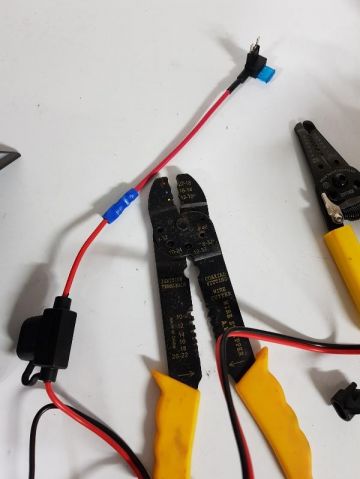
- If your add-a-fuse adapter has a butt connector, crimp your power wire into it, insert the original fuse in the secondary slot, and plug the adapter into the fuse box.
- Ground: a 10 mm screw just below and to the right of the fuse box works as a ground point.
This gives you switched power (on when the car is on).
Option 2: Passenger kick panel fuse box (2016+)
Cars built in 2016 or later have a fuse box behind the passenger-side kick panel. Accessing it involves removing the kick panel trim. This takes roughly an hour. Re-crimping the 12 V wire to reach may be necessary depending on your accessory's cable length.
Once exposed, the same add-a-fuse approach applies: pick an appropriate fuse, insert the original into the fuse tap's secondary slot, and tap the circuit.
Option 3: Frunk fuse box (cars without cabin fuse access)
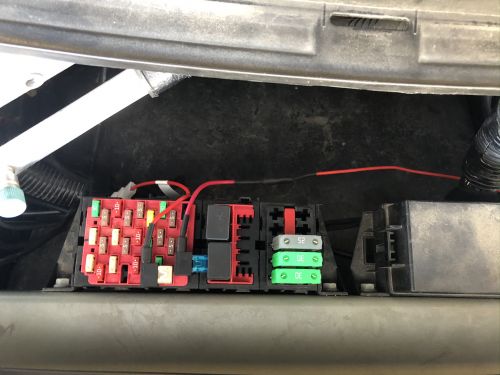
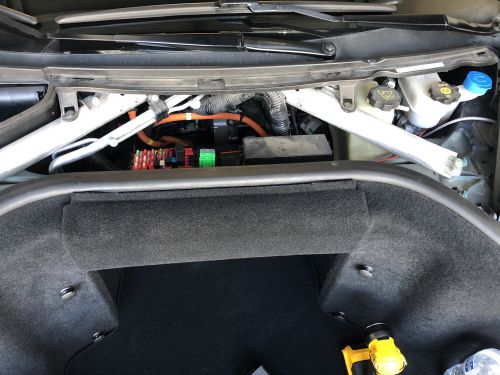
Cars that have neither the cold weather fuse box nor the 2016+ passenger panel fuse box require routing a wire from the frunk fuse box through the firewall and into the cabin. This is the most involved method — plan on 1–2 hours or more.
What you need:
- 13 mm socket (for the ground bolt)
- Plastic pry tools
- Fishing tape or a straightened metal hanger
- A sharp tool to punch through the rubber firewall gasket
The route:
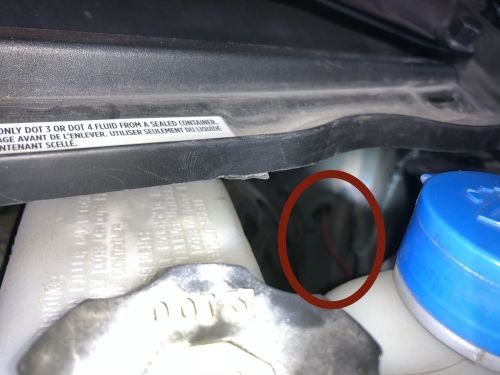
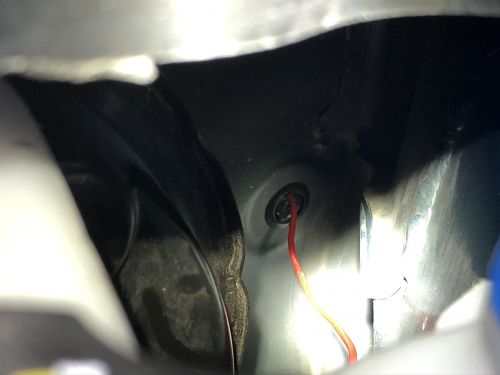
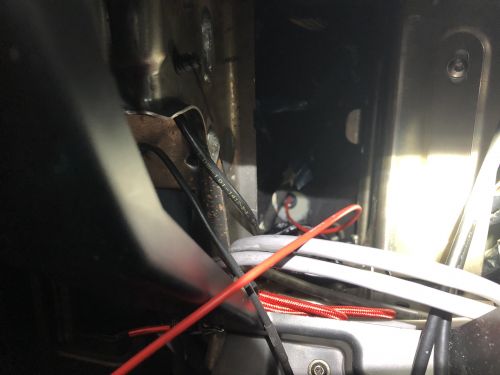
There is a rubber gasket behind the washer fluid reservoir in the frunk that passes through the firewall. You can poke a small hole in it, feed your wire through from the frunk side, and pull it into the cabin behind the driver's kneeboard panel.
The frunk fuse box is on the right side of the frunk as you face the car from the front. Fuse F36 is one option for an always-on tap (confirm with your car's fuse chart — F36 may not be populated on all configurations). Fuse F75 is also used for the radar harness. Use an add-a-fuse tap, same as the other methods.
Ground is available via the 13 mm bolts on the plastic panel to the left of the kneeboard compartment.
Always-on vs switched
- Always-on (directly from a battery-backed fuse): draws from the 12 V battery even when the car is off. Acceptable for very low quiescent current devices, but leaving the car parked for extended periods with a parasitic draw risks a discharged 12 V battery. The Tesla 12 V battery is not large.
- Switched (ignition-on circuit): only live when the car is on or in a standby state where that circuit is powered. Safer for the battery, but the device will power down when the car goes to sleep.
For the comma device, the OBD2 adapter draws power directly from port pin 16. You should not need to tap separate 12 V for the comma device itself.
General tips
- Use properly rated fuse taps — cheap adapters fail and can cause shorts.
- Route wires away from sharp edges and hinge points. Use wire loom or spiral wrap through areas where the wire could chafe.
- Crimp rather than splice where possible; a proper crimp is more reliable than a solder joint that flexes.
- Label your taps if you add more than one — it's easy to forget which circuit is which six months later.