AP1 and AP2 Teslas on Tinkla
Archive of Tinkla's support for Model S/X with Autopilot hardware 1 and 2 — harnesses, capabilities, and where those owners should look today.
Updated June 11, 2026
This page documents Tinkla's support for Model S and Model X with factory Autopilot hardware for the historical record. NotAutopilot is a pre-AP only project. If you have an AP1 or AP2 car, NAP is not the right fork for you — read the "Where to go today" section at the bottom.
Background
Tinkla's initial focus was pre-AP Model S, but the developer (boggyver) ended up retrofitting a full AP1 kit to his own pre-AP car in 2019 — new steering column, ESP v2, iBooster, radar, AP1 hardware, and the matching windshield. After one month of driving it he wanted his old openpilot setup back. That experience led him to build openpilot support for AP1 cars, keeping factory AP available for drivers who wanted it while adding openpilot on top.
AP1 support launched alongside the v0.8.13-31 era (2022). AP2/2.5/3 support was present in the Tesla Unity branch as well, incorporating the upstream comma.ai AP2 code with Tinkla-specific additions.
AP1 — what it was
Autopilot hardware 1 was a MobilEye-based system. Tesla shipped it in Model S from 2015 and Model X in 2016, and stopped updating it after dropping MobilEye in October 2016. By 2022 the AP1 hardware received no meaningful software updates.
The AP1 hardware controlled steering using the chassis CAN bus and handled acceleration and braking through a separate Powertrain CAN path. A comma two or comma three with the right harness could tap into that steering channel and either work alongside factory AP or replace it.
What openpilot added on AP1
Running the Tinkla branch on an AP1 car gave:
- Openpilot lane keeping that did not exhibit the AP1 tendency to pull toward the road edge on hills
- Camera-based driver monitoring instead of the constant steering-wheel nag timer
- The ability to run openpilot for lane keeping while letting the factory ACC handle speed — useful if AP1 stop-and-go was preferred
- Full openpilot longitudinal control on comma three (stopping for stop signs and lights, map-based navigation)
- Automatic lane change with blind spot monitoring and adjustable delay
- IC integration showing openpilot data on the instrument cluster
Engagement on AP1 cars was stalk-based: single pull engaged openpilot (OP), double pull engaged factory AutoPilot (AP), up/down stalk movement used factory ACC only.
AP1 harness — Model S
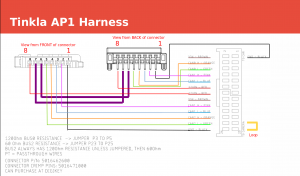
The AP1 harness connected the comma device to the AP1 hardware ECU rather than to the car's chassis OBD2 port. The AP1 hardware connector used a TE Connectivity/AMP system:
1-1743284-2— connector shell (one needed)1-1743282-2— secondary connector shell (one needed)5-963715-1-CT— crimp pins (8 needed, sold in strips of 100)- Approximately 500 mm (20") of 18 AWG automotive wire for the defrost power leads
The Comma car harness for development vehicles provided the 26-pin connector. All unused wires were removed from that connector to keep the install tidy under the roof liner. The jumper that ships between pins 3–5 on the comma harness needed to be moved to pins 23–25.
The defrost circuit (pins 6 and 7) carries 10 A at 12 V. The stock comma harness wires are too thin for this current — 18 AWG wire from the parts list must be used for those two connections.
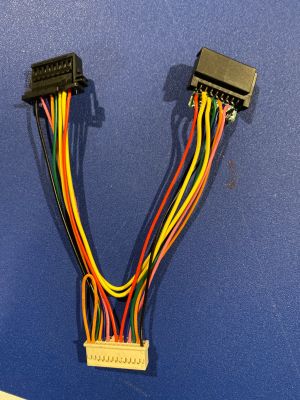
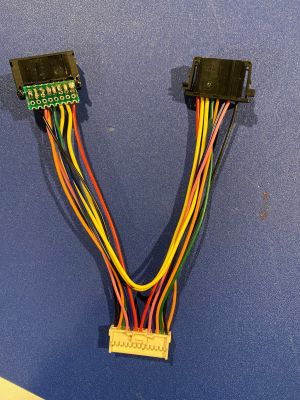
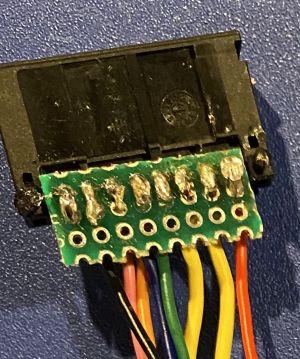
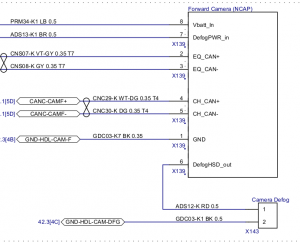
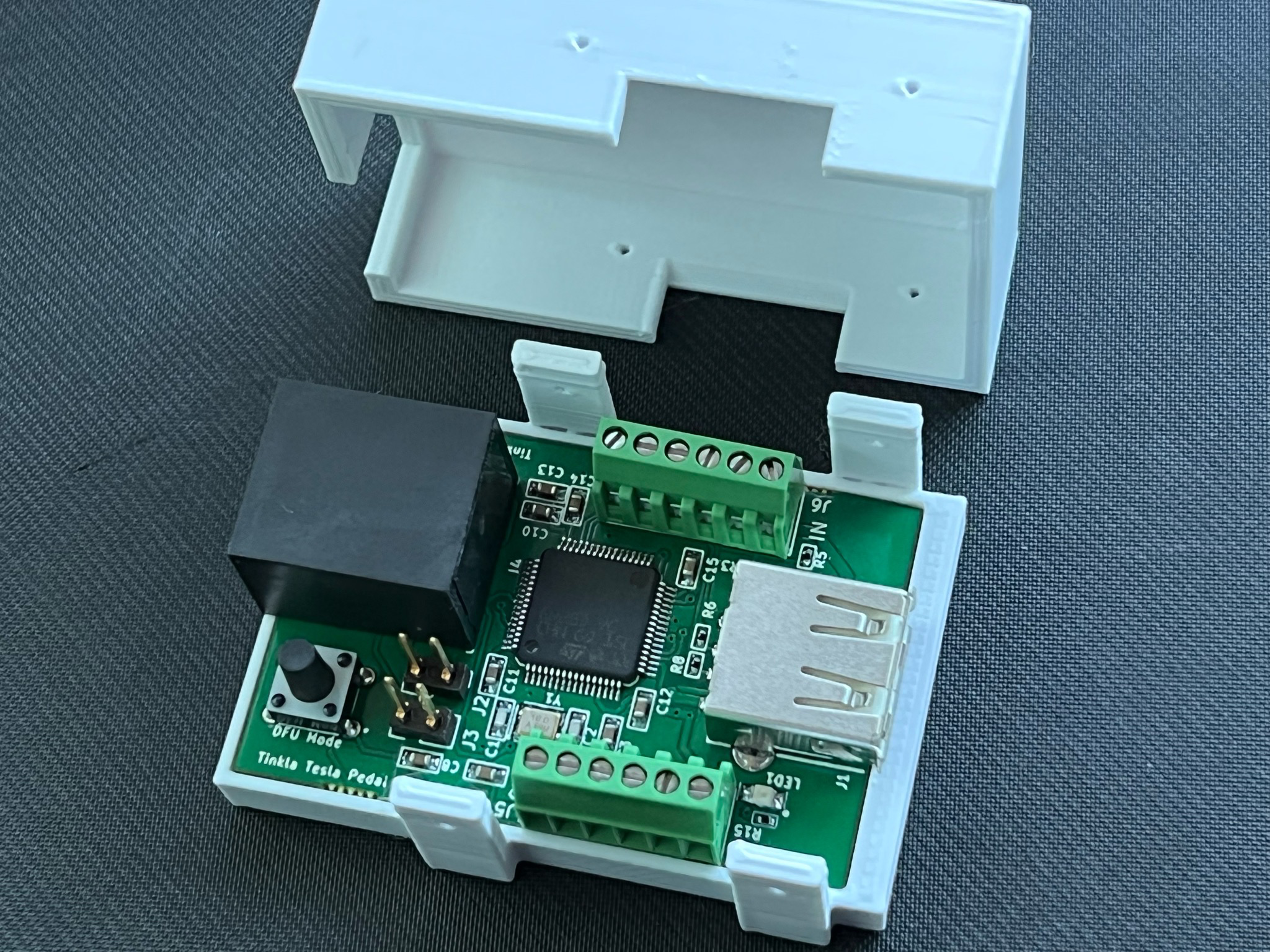
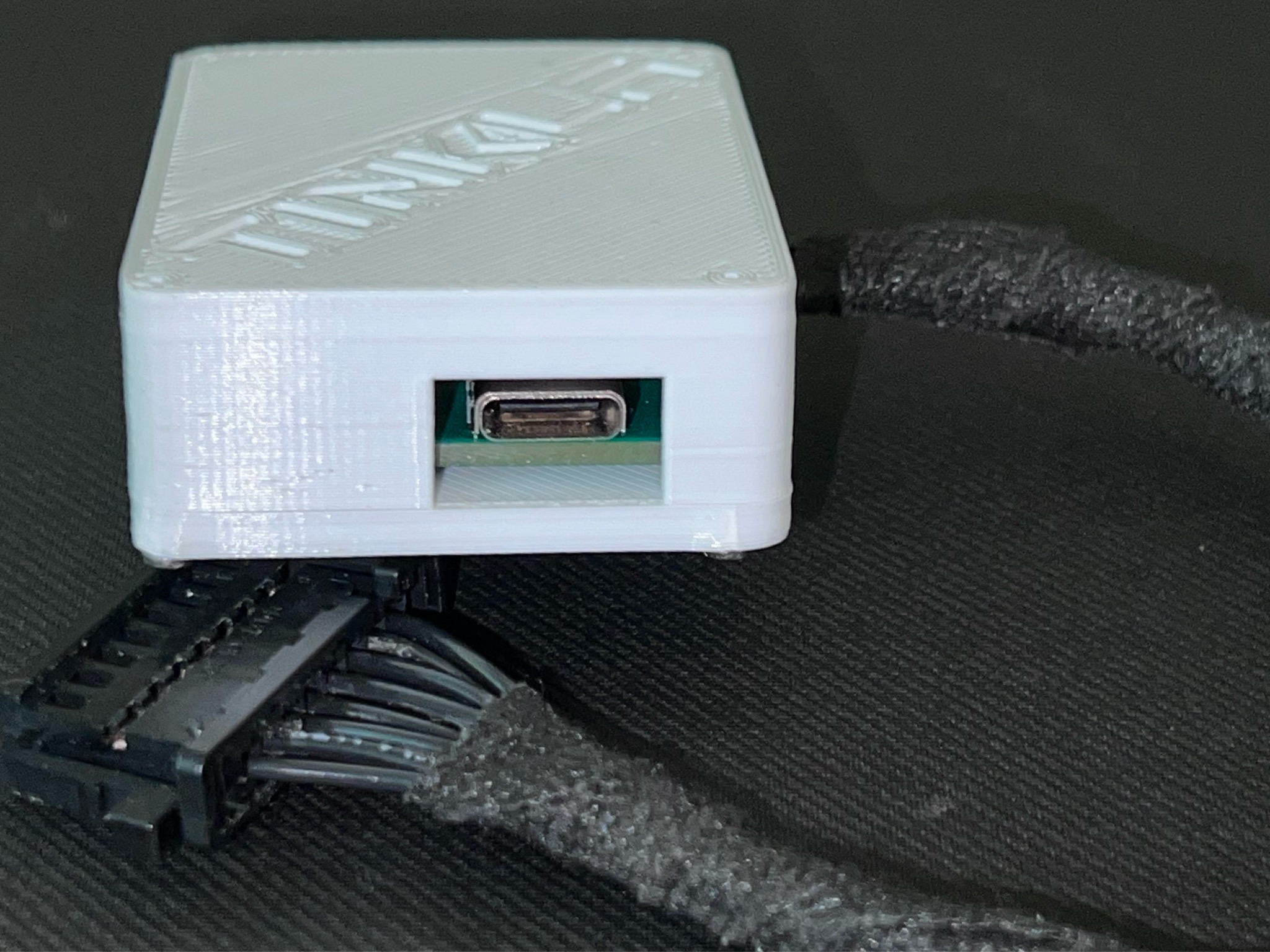
Tinkla also sold a pre-assembled Tinkla OBD-C Adapter for Tesla Model S with AP1 at $125, described as a completely plug-and-play solution. It connected to the AP1 hardware ECU and presented an OBD-C port for the comma devkit.
AP1 — Model X
The Model X with AP1 hardware is a 2016 car. The AP1 hardware sits behind the glovebox rather than near the A-pillar as on the Model S. The OBD-C adapter for Model X AP1 was listed as coming soon in mid-2023 on the Tinkla site; the Model S adapter was available earlier.
Connection required a 6.5 ft USB4/Thunderbolt3 cable to reach from the device mount position to the hardware behind the glovebox. Standard USB-C cables are not suitable — the adapter requires a full USB4/TB3 cable.
AP2/2.5/3 — what it was
AP2 hardware (found in Model S/X from 2016 onward) was Tesla's own compute platform, not MobilEye. AP2 cars use multiple cameras. Comma.ai officially supported AP2 Tesla on the main openpilot branch, so the Tinkla Unity branch incorporated that upstream code and added Tinkla-specific features on top.
The key difference from AP1 was the CAN architecture: AP2 controlled steering through the chassis CAN but handled acceleration and braking through the Powertrain CAN. That required two separate harnesses and two CAN connections.
AP2 limitations by device
- Comma two: only lateral (steering) control — one harness for the chassis CAN path. Longitudinal (speed) control was not possible because the comma two could not manage two Pandas simultaneously.
- Comma three: full lateral and longitudinal control using two harnesses and a black Panda connected to the comma three's second USB-C port.
AP2 harness
Full longitudinal control on AP2 required:
- Two Comma car harnesses for development vehicles
- A black Panda
- Connectors and crimped pins per the harness diagram for both the lateral and longitudinal control harnesses
- Two 6.5 ft USB4/Thunderbolt3 cables
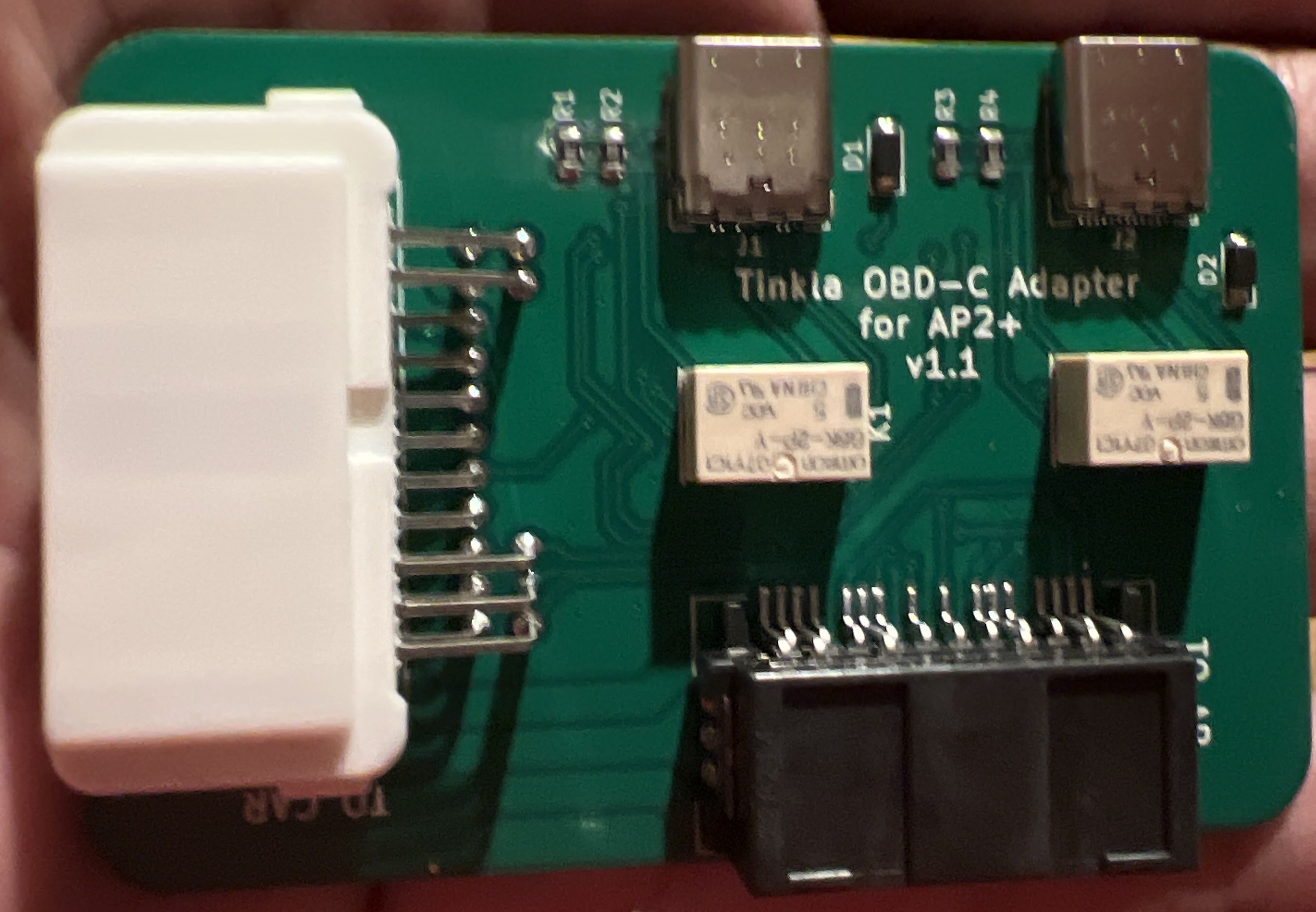
The Tinkla OBD-C Adapter for Tesla with AP2+ was a planned product, listed as available by mid-September 2022, that would bundle both connections into a single plug-and-play device for comma three plus black Panda.
What openpilot added on AP2
For AP2/2.5/3 owners who had not purchased FSD, openpilot on the Tinkla branch provided:
- Full lane keep, automatic lane change, adaptive cruise with stop-and-go
- Stopping for stop signs and traffic lights (experimental, via comma's e2e longitudinal model)
- Navigate on maps
- IC integration showing openpilot data alongside the factory display
- Coexistence with factory AutoPilot — openpilot ran independently and could be switched between
The pitch for AP2 owners was straightforward: if you did not pay for FSD you were sitting on hardware capable of stop-and-go with friction braking, and openpilot could run that hardware better than the factory ACC-only mode.
Model 3/Y — development stopped
Tinkla was working on a Model 3/Y harness that required three separate CAN intercepts (compared to one or two for Model S/X). Prototype hardware was tested and a production run was planned for early 2024. The design called for a harness estimated at $700–$800, or alternatively two black Pandas plus three relay boxes plus wiring — a much more expensive DIY path.
The project went inactive before that harness shipped.
Where to go today
NotAutopilot is pre-AP only. If you have any AP hardware, NAP is not compatible with your car.
For AP1 Model S and X, xnor-tech's openpilot fork is the active continuation of the AP1 work. It builds on the same foundation as NAP and continues to receive updates. Start at the xnor wiki — it covers HW1+ cars the way this wiki covers pre-AP. The SunnyPilot-TeslaHW1 fork also works on AP1 cars and is worth a look.
For AP2/2.5/3 cars, comma.ai's main openpilot branch officially supports Tesla AP2 hardware. The comma store sells AP2 Tesla harnesses directly. Start at https://comma.ai.
For Model 3/Y, also check the main comma.ai openpilot branch and the official Tesla support list.
None of the Tinkla hardware — OBD-C adapters, Tinkla Relay, Tinkla Buddy — is available for purchase. The tinkla.us store is offline.